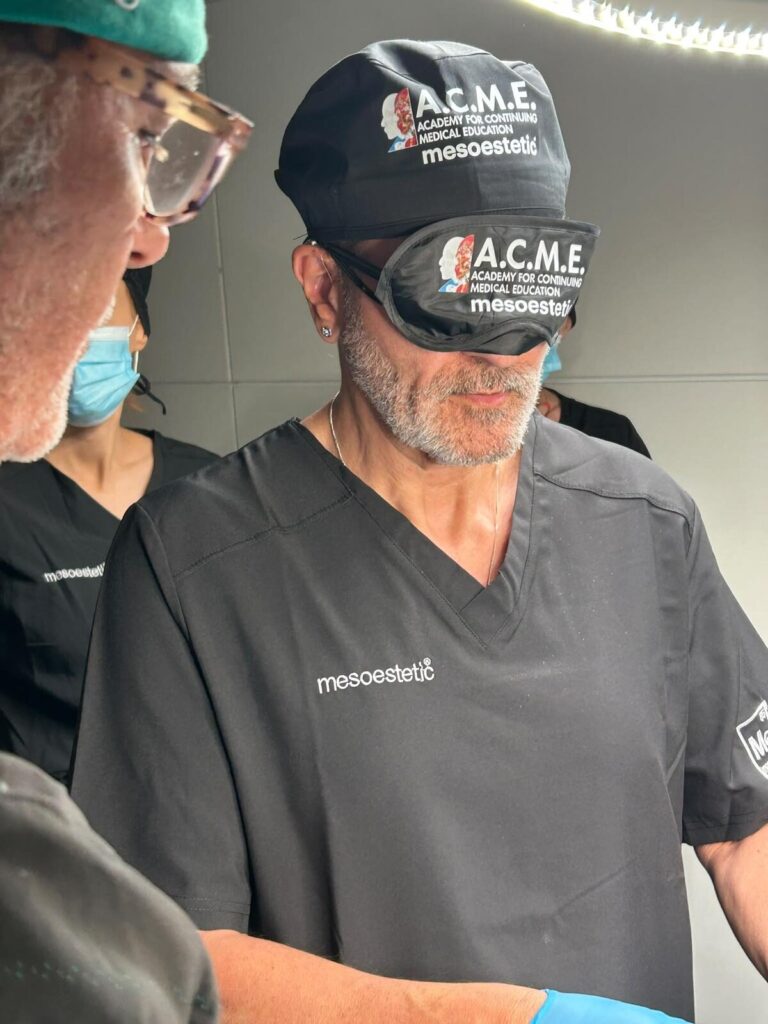
During a recent advanced cadaver training course in Parma, Dr Fab was given a challenge that was designed to really put his anatomical knowledge to the test. The doctor leading the course felt that the standard practical exercises might not push him far enough, so he raised the stakes: could Dr Fab perform the injection blindfolded?
He accepted the challenge, relying on his knowledge of facial anatomy, depth and positioning rather than sight. When the area was examined afterwards, the product had been placed exactly where intended.
It was an impressive moment, but more importantly, it highlights something patients rarely get to see: just how much anatomical knowledge sits behind advanced injectable treatment. The exercise took place in a controlled training environment, rather than on a patient, and was designed specifically to challenge an experienced doctor and put years of anatomical understanding into practice.
At Enhance Clinispa, this is exactly why we place so much importance on continued medical education. Injecting filler is not simply about knowing where to place a needle. It is about understanding the layers, structures and tissue planes beneath the skin, knowing where you want the product to go and having the experience to translate that knowledge into precise placement.
So, when you choose someone to perform an injectable treatment on your face, it is worth asking: how well do they really understand what lies beneath the skin?
Why Does Facial Anatomy Matter When You Are Having Injectables?
From a patient’s perspective, an injectable treatment can appear relatively straightforward. The face is assessed, an injection point is chosen and the product is placed. Behind that apparently simple process, however, is a detailed understanding of the anatomy beneath the skin.
An experienced injector is working with multiple layers and structures, including:
- Skin and underlying tissue
- Superficial and deeper facial fat compartments
- Muscles
- Ligaments
- Blood vessels
- Bone and deeper structural anatomy
These structures sit at different depths, interact with one another and can vary from one person to another. This means the injector is thinking beyond the point where the needle or cannula enters the skin. They are considering the tissue plane they want to reach, the structures around it and how the chosen placement relates to the result they are trying to achieve.
At Enhance Clinispa, this anatomical understanding forms part of how we assess and plan injectable treatments. Different treatment goals require different approaches, and creating deeper structural support is not the same as treating a more superficial concern. Rather than thinking in terms of standard injection points, we consider the individual face, what we are trying to achieve and the anatomy we are working with.
What Actually Happens During Cadaver Training?
Cadaver training gives doctors an exceptional opportunity to study real human anatomy in a level of detail that illustrations, demonstrations and textbooks cannot fully recreate. These structured medical training courses are made possible by human donors and allow doctors to examine the anatomy layer by layer.
For an aesthetics doctor, this brings familiar anatomy to life. Rather than looking at a diagram showing where a muscle, blood vessel or facial fat compartment should sit, they can examine how these structures actually relate to one another and explore the tissue planes they work within during injectable treatments.
One of the most fascinating parts of the practical training is the use of dyed filler. The product can be injected and the anatomy then carefully dissected, allowing the practitioner to see exactly where it has been placed.
For Dr Fab, this provides the opportunity to take the anatomical knowledge and techniques used at Enhance Clinispa and examine them from an entirely different perspective.
Where Did the Filler Actually Go?
This is where cadaver training becomes particularly valuable for an experienced injector. Once the dyed filler has been placed, the practitioner can examine the anatomy and see exactly how their intended placement translates beneath the skin.
They can assess:
- Whether the filler reached the intended depth
- Whether it was more superficial or deeper than expected
- How it sits in relation to the facial fat compartments
- How close the placement is to important vascular structures
- Whether the intended placement matches where the product actually went
It provides something that cannot be recreated during normal patient treatment: the ability to inject a product and then physically examine its position afterwards.
For Dr Fab, this is an opportunity to put years of anatomical knowledge and injecting experience to the test. Seeing the filler precisely within the intended tissue plane can validate an existing approach, while anything unexpected creates an opportunity to investigate, learn and refine the technique further.
This is one of the reasons we value advanced education so highly at Enhance Clinispa. Even with extensive experience, there are opportunities to examine what you do, challenge your knowledge and continue developing your approach.
Why Was Dr Fab Asked to Inject Blindfolded?
Dr Fab’s blindfolded exercise during the Mesoestetic course in Parma took that challenge one step further. Because the doctor teaching the course wanted to push his existing level of experience, he temporarily removed something an injector would normally rely on: visual guidance.
Dr Fab therefore had to draw on his knowledge of facial anatomy, depth and positioning to complete the exercise. When the area was subsequently examined, the product was found exactly where intended.
It is a striking example of what can develop through years of medical training, anatomical study and practical experience. For Dr Fab, understanding anatomy is not simply about being able to identify structures on a diagram. That knowledge informs how he assesses the face, recognises depth and understands where he is working beneath the skin.
The blindfold made the exercise memorable, but the real achievement was being able to put that knowledge to the test and then confirm the placement afterwards.
Why Is Continued Advanced Training Important to Us?
At Enhance Clinispa, we believe experience and continued learning should go hand in hand. Reaching an advanced level does not mean there is nothing more to learn. Instead, it creates opportunities to explore anatomy and technique in greater detail.
Advanced cadaver training allows Dr Fab to:
- Test and reinforce his anatomical knowledge
- Examine anatomical differences between individuals
- Explore different products and injection techniques
- Review depth and tissue-plane selection
- Continue refining techniques already used in clinical practice
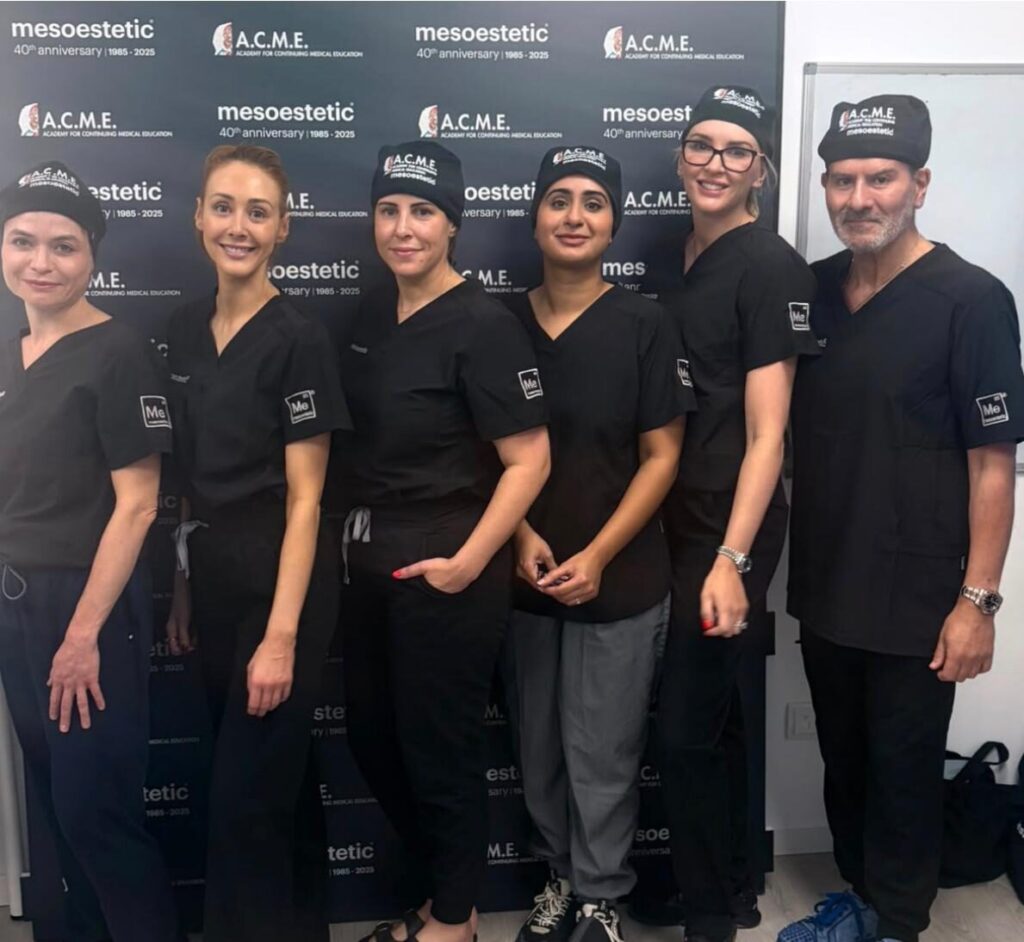
Dr Fab’s recent training in Parma was not an isolated course. Within a matter of weeks, he was invited to undertake advanced cadaver training with both Mesoestetic in Parma and IBSA in Poland, alongside his wider medical and industry education.
These are highly specialised training opportunities, with invitations reflecting the level of experience and expertise a practitioner has already developed. Being invited to attend two advanced cadaver courses within such a short period is therefore a significant recognition of Dr Fab’s standing within the field, as well as an opportunity to continue developing his anatomical knowledge and technique.
For us at Enhance Clinispa, this is what continued professional development should look like. Qualifications provide an important foundation, but learning continues throughout a medical career. Dr Fab continues to dedicate considerable time to advanced education, bringing that developing knowledge back into the way we assess, plan and deliver treatment for our patients.
What Does This Level of Training Mean for Our Patients?
When you come to Enhance Clinispa for an injectable treatment, you do not need to know the names and positions of every facial artery, ligament or fat compartment. That is our job.
What matters is that the decisions behind your treatment are based on an understanding of your individual anatomy rather than simply following a standard injection pattern.
When we assess you for injectable treatment, we consider:
- Whether the treatment is appropriate for your concern
- Where a product may need to be placed
- The appropriate depth and tissue plane
- Which technique is best suited to the area
- The anatomical structures surrounding the treatment area
Two patients can come to us concerned about exactly the same area of the face and still require different approaches. Their anatomy, proportions, existing volume and treatment goals may all be different, which is why assessment and treatment planning matter.
Advanced anatomical training supports this individual approach. It gives Dr Fab further opportunities to deepen and test the knowledge he draws on when assessing our patients and planning their treatments.
As with any medical procedure, injectable treatments carry risks and no training course can guarantee a particular outcome. Cadaver training sits alongside medical education, clinical experience, careful assessment and judgement as part of the wider expertise we bring to treatment at Enhance Clinispa.
What Should You Look for When Choosing an Aesthetics Practitioner?
We believe patients should feel comfortable asking questions about the person they are trusting with their face. Cadaver training is only one part of being an experienced injector, but it is a good example of the level of ongoing education that can sit behind the treatment you receive.
When choosing a practitioner, it is worth considering:
- Their medical background and qualifications
- Their experience with injectable treatments
- The advanced training they have undertaken
- How they continue developing their anatomical knowledge and technique
- How thoroughly they assess you before recommending treatment
- Whether they can explain why a particular approach is right for you
At Enhance Clinispa, we want you to understand why we are recommending a treatment rather than simply being told what you “need”. Your consultation gives us the opportunity to assess your face, understand what you would like to improve and explain the approach we believe is appropriate for you.
You do not need to understand every structure beneath your skin yourself. You should be able to feel confident that the doctor treating you has invested the time, training and experience required to understand them.
Understanding What Lies Beneath the Skin
The blindfolded injection is a brilliant story, but what happened afterwards is what gives it real meaning. Examining the anatomy and seeing that the dyed filler had reached its intended position offered a rare demonstration of the knowledge and precision behind advanced injectable treatment.
Dr Fab’s recent cadaver training with Mesoestetic in Parma and IBSA in Poland reflects our wider approach at Enhance Clinispa. We believe injectable treatment should be underpinned by a detailed understanding of facial anatomy, alongside experience and continued medical education.
If you are considering injectable treatment, book a consultation with Dr Fab and the Enhance Clinispa team. We can assess your concerns, discuss your options and explain the thinking behind any treatment we recommend.