Rosacea Isn’t Just Redness: What’s Really Happening Under the Skin.
If you’ve ever looked in the mirror and felt that your skin appears persistently flushed, you are not alone. Many patients initially assume ongoing redness is simply a sign of sensitive skin, or the result of external triggers such as weather, stress, or lifestyle factors.
At Enhance Clinispa, we observe a significant number of patients, with varying degrees of redness, which clearly indicates that the underlying cause is often more complex.
Rosacea is a chronic inflammatory skin condition. It involves changes in the skin’s vascular system, immune response, and barrier function.
Advances in aesthetic medicine now allow for far more effective management of rosacea than previously possible. In this guide, we explore the underlying mechanisms of rosacea, the factors that contribute to its progression, and how clinically proven treatments can help restore a calmer, more balanced complexion over time.
What Is Rosacea?
Rosacea is a long term skin condition that mainly affects the face. It is more commonly seen in women and people with lighter skin, however symptoms can be worse in men.
It typically appears across the cheeks, nose, chin, and forehead and may cause:
- Persistent redness
- Visible blood vessels
- Flushing or heat in the skin
- Acne-like bumps
- Skin sensitivity
Why Rosacea Causes More Than Just Redness
The redness associated with rosacea is caused by changes occurring within the tiny blood vessels beneath the skin’s surface.
Blood Vessel Dilation
Rosacea triggers repeated dilation of the small blood vessels within the skin. These vessels expand in response to various triggers such as:
- Heat
- Alcohol,
- Spicy foods
- Stress
- Sun exposure.
Over time, the vessels lose their ability to constrict normally. This leads to persistent redness and visible capillaries, particularly across the cheeks and nose.
Chronic Inflammation
Rosacea also involves ongoing inflammation within the skin.
Inflammatory signals disrupt normal skin function, making the skin more reactive and sensitive. This inflammation may contribute to common symptoms including:
- Burning
- Stinging
- Irritation.
Compromised Skin Barrier
The skin barrier protects against environmental irritants and prevents water loss. In rosacea-prone skin, this barrier is often weakened, which allows irritants to penetrate more easily and trigger flare-ups.
Increased Nerve Sensitivity
Rosacea also affects nerve responses within the skin. This explains why many patients experience sudden flushing, warmth, or stinging sensations even when the skin looks relatively calm.
Common Triggers That Worsen Rosacea
Rosacea flare-ups are often triggered by external or lifestyle factors.
Common triggers include:
- Sun exposure
- Heat and hot environments
- Alcohol consumption
- Spicy foods
- Emotional stress
- Skincare products containing strong active ingredients
These triggers increase blood flow within the skin, which can worsen redness and inflammation.
Learning to identify personal triggers is an important part of long-term rosacea management.
The Different Types of Rosacea
Rosacea can present in several forms, and many patients experience a combination of symptoms.
Erythematotelangiectatic Rosacea – flushing, skin discoloration and visible small blood vessels. It is the most common type of rosacea.
Papulopustular Rosacea – this causes breakouts similar to acne, as well as flushing and swelling.
Phymatous Rosacea – thickening of the skin, particularly around the nose, more frequently seen in men.
Ocular Rosacea – causes eye redness, dryness, irritation and swollen eyelids.
Why Rosacea Often Gets Worse Over Time
Without treatment, rosacea can get worse over time.
Repeated dilation of blood vessels causes them to become permanently enlarged, which results in visible capillaries and constant redness. Inflammation also becomes more persistent, leading to increased sensitivity and flare-ups.
Early intervention is important and can significantly slow this progression.
How The Motus Pro Laser Helps Treat Rosacea
One of the most effective ways to treat rosacea-related redness is by targeting the underlying blood vessels responsible for the condition. This is where Motus Pro laser technology plays a powerful role.
At Enhance Clinispa, Motus Pro laser treatment is used to safely address vascular redness while protecting the surrounding skin.
How Motus Pro Laser Technology Works
The Motus Pro laser uses targeted energy to selectively heat the small blood vessels causing redness.
This controlled heat causes the vessels to collapse, allowing them to be naturally reabsorbed by the body. As the vessels fade, the visible redness across the skin reduces.
The surrounding skin remains protected due to the precise delivery of laser energy.
Why Motus Pro Is Different From Older Laser Treatments
Motus Pro technology uses advanced, dual wavelength technology combined with specialised Moveo technology to deliver pain-free, effective treatment. It is suitable for sensitive, inflamed skin and can be used on all skin types and tones, providing a safer and more comfortable experience than traditional vascular lasers.
Additional Benefits of Motus Pro Laser
As well as improving redness, Motus Pro laser treatments can help:
- Reduce visible capillaries
- Improve overall skin tone
- Calm inflammatory activity
- Improve skin clarity
Many patients also notice an overall improvement in skin quality.
What to Expect During Treatment
Rosacea treatment with Motus Pro typically involves a series of sessions.
During your personalised skin consultation, our practitioners assess the severity of redness and vascular activity before recommending the appropriate treatment plan.
Each session usually takes around 30 minutes. Your skin will be cleaned thoroughly and a specialized, cooled Moveo handpiece is moved in small circular motions over the affected area. The laser emits energy that is absorbed by haemoglobin in the blood vessels, causing them to heat up and collapse, so that they can be reabsorbed by the body.
The handpiece remains cool throughout the session for your comfort. Some patients may experience mild warmth or slight redness immediately after treatment, however downtime is minimal.
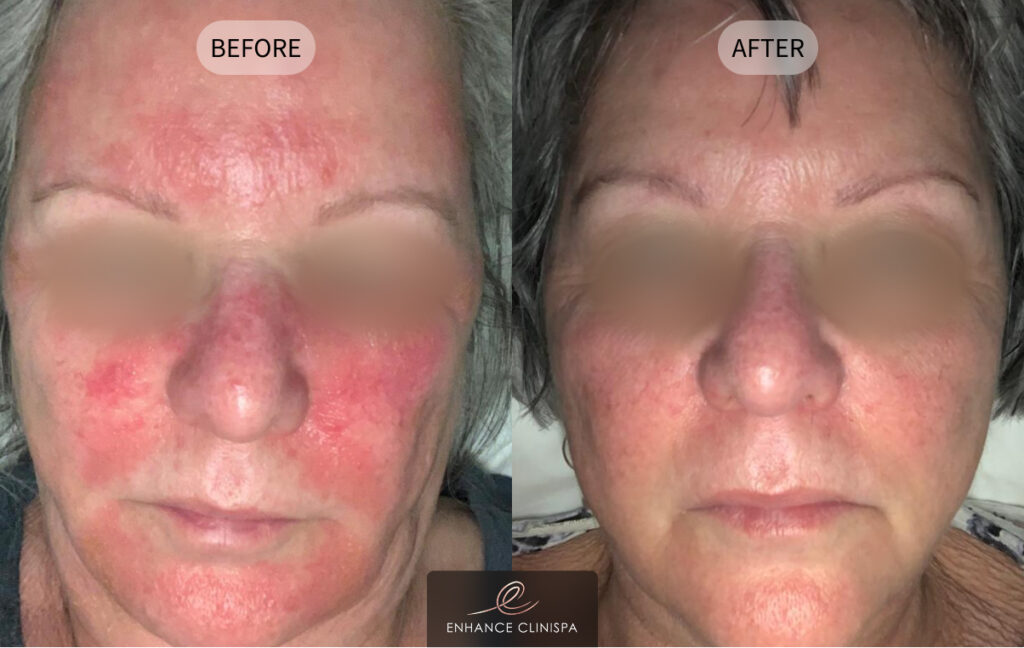
Gradual improvements are typically seen over several sessions as blood vessels fade and inflammation decreases.
Supporting Rosacea Treatment With Skincare
Professional treatments achieve the best results when combined with a carefully selected skincare routine. We take a comprehensive approach to rosacea management, ensuring that in-clinic treatments are supported by medical-grade products designed to strengthen and protect the skin.
For patients experiencing persistent redness and sensitivity, we often recommend targeted systems that address multiple underlying causes of rosacea simultaneously.
The Redness Relief + Barrier Defense Program
The Redness Relief + Barrier Defense Program is a complete skincare system designed to improve skin barrier function while addressing the key factors that contribute to redness and skin sensitivity.
This clinically developed programme by ZO Skin Health is ideal for rosacea-prone and reactive skin, helping to restore balance and reduce visible symptoms over time.
Kit Contents
The system includes a combination of products that work together as a structured routine:
- Gentle Cleanser (60 ml)
- Exfoliating Polish (16.2 g)
- Calming Toner (50 ml)
- Daily Power Defense (30 ml)
- Rozatrol® (20 ml)
- Soothing Hydro Mist (100 ml)
Each product plays a specific role in calming inflammation, strengthening the skin barrier, and improving overall skin resilience.
Key Benefits
One of the standout components of this system is Rozatrol®, a patented, multi-modal serum that has been clinically shown to visibly relieve multiple symptoms associated with rosacea-prone skin.
When used consistently, the programme can help to:
- Support and repair a compromised skin barrier
- Reduce visible redness and inflammation
- Improve overall skin comfort and tolerance
- Deliver antioxidant protection against environmental stressors
- Promote a calmer, more balanced complexion over time
By addressing both surface-level symptoms and deeper skin dysfunction, this system complements other treatments such as Motus Pro laser therapy, enhancing and prolonging results.
When Should You Seek Treatment?
If redness persists even when your skin is calm, it may indicate underlying vascular rosacea.
Other signs include:
- Frequent flushing
- Visible blood vessels
- Skin that feels warm or reactive
- Persistent redness across the cheeks or nose
Managing rosacea effectively requires consistency and a tailored approach. While laser treatments help reduce vascular redness, skincare plays a critical role in maintaining results and preventing flare-ups.
At Enhance Clinispa, we guide each patient in building a routine that supports their skin long-term. Book a consultation to find out how we combine advanced technology with clinically proven skincare systems, to achieve stable, long-lasting improvements in redness and overall skin health.
FAQs
What is the main cause of rosacea?
Rosacea is caused by a combination of genetic predisposition, vascular sensitivity, immune responses, and environmental triggers.
Can rosacea be cured permanently?
Rosacea cannot be completely cured, but treatments such as laser therapy and medical skincare can significantly reduce symptoms and control flare-ups.
Does laser treatment help rosacea redness?
Yes. Laser treatments such as Motus Pro can effectively target the blood vessels responsible for persistent redness.
How many laser treatments are needed for rosacea?
Most patients benefit from a course of 3-4 treatments spaced several weeks apart.
What triggers rosacea flare-ups?
Common triggers include sun exposure, alcohol, spicy foods, stress, and hot environments.