Let’s start with a question many of our patients ask when they walk into Enhance Clinispa.
Why am I breaking out like a teenager again… but now I also have dark marks that refuse to disappear?
If you are in your 30s or 40s and suddenly dealing with hormonal acne, jawline breakouts, and stubborn pigmentation, you are not imagining things. In fact, this combination is one of the most common skin concerns we see in clinic.
Adult hormonal acne behaves very differently from teenage acne. Breakouts are often deeper, more inflammatory, and more likely to leave behind post-inflammatory hyperpigmentation or uneven skin tone. At the same time, hormonal fluctuations begin to influence oil production, skin healing, and collagen turnover.
The good news is this. Once you understand why hormonal acne and pigmentation occur together, the treatment strategy becomes much clearer.
At Enhance Clinispa, we take a long-term, consultation-led approach that focuses on calming inflammation, restoring healthy skin function, and improving both acne and pigmentation safely and effectively.
Why Hormonal Acne Often Appears in Your 30s and 40s
Hormonal acne in adult women is driven by internal changes rather than surface skincare issues.
While teenage acne is often linked to puberty and temporary oil production spikes, adult hormonal acne is influenced by a range of biological factors including hormone fluctuations, stress, inflammation, and metabolic changes.
The Role of Androgens in Adult Female Acne
Hormones called androgens play a significant role in adult acne. These hormones stimulate the sebaceous glands, which increases oil production within the skin.
When excess oil combines with dead skin cells and bacteria, pores become blocked. This creates the ideal environment for inflammatory acne lesions to form.
The result is the kind of deeper, often painful breakouts many women notice in their 30s and 40s.
Why Breakouts Appear Along the Jawline and Chin
Hormonal acne tends to concentrate along the jawline, chin, and lower cheeks.
These areas contain a higher density of hormone-responsive sebaceous glands. When hormone levels fluctuate, these glands become more active, leading to persistent breakouts in these zones.
Many patients notice this pattern repeating monthly, particularly around their menstrual cycle.
Hormonal Changes During Perimenopause
Perimenopause can begin as early as the late 30s or early 40s.
During this time, oestrogen levels gradually decline while androgen activity may remain relatively stable. This hormonal imbalance can trigger:
- Increased oil production
- Inflammatory breakouts
- Slower skin healing
- Increased pigmentation after acne
These changes often explain why skin behaves differently during this stage of life.
Stress, Cortisol and Inflammatory Skin Changes
Stress also plays a major role in adult acne.
When cortisol levels rise, the body produces more oil and inflammatory signals within the skin. This can worsen acne severity while also impairing the skin’s ability to recover quickly.
In many patients, stress and hormonal fluctuations combine to create persistent breakouts.
Why Acne Often Leads to Pigmentation
One of the most frustrating aspects of adult acne is not always the spot itself. It is the dark marks that remain long after the blemish has healed.
What Is Post-Inflammatory Hyperpigmentation?
Post-inflammatory hyperpigmentation, often shortened to PIH, occurs when inflammation triggers excess melanin production within the skin.
When an acne lesion forms, the skin responds by sending inflammatory signals to the area. This process stimulates pigment cells called melanocytes.
The result can be brown, red, or purple marks that linger long after the acne clears.
Why Adult Skin Develops Dark Marks More Easily
As skin matures, the healing process slows slightly. Collagen production decreases and cell turnover becomes less efficient.
This means inflammation from acne can leave visible marks for longer periods.
Many patients notice that pigmentation from acne may persist for several months if left untreated.
Inflammation, Melanin and Skin Healing
Inflammation is the key driver behind both acne and pigmentation.
When the skin experiences inflammation repeatedly, pigment production becomes more active. This is why untreated acne often leads to uneven skin tone and lingering dark marks.
Why Picking or Squeezing Spots Makes Pigmentation Worse
We know it is tempting.
However, squeezing or picking at spots dramatically increases inflammation in the skin.
This behaviour significantly increases the risk of scarring and pigmentation. One of the most important steps in preventing pigmentation is allowing blemishes to heal without additional trauma.
Common Hormonal Skin Concerns in Women Over 30
Hormonal skin changes do not always present in the same way. However, there are several patterns we commonly see in clinic.
Persistent Jawline Acne
Deep, painful spots along the jawline are one of the most recognisable signs of hormonal acne.
These lesions often appear cyclically and may take longer to heal.
Hormonal Breakouts Around the Mouth
Breakouts around the chin and mouth area are also very common in adult female acne.
These spots are often linked to fluctuations in androgen activity.
Dark Marks After Acne
Pigmentation after acne is one of the most common complaints from patients in their 30s and 40s.
Even when breakouts resolve, dark marks may remain visible for months.
Uneven Skin Tone and Melasma
Some patients also experience melasma, a hormone-related pigmentation condition that causes patchy brown areas across the cheeks, forehead, and upper lip.
Hormonal fluctuations, sun exposure, and inflammation can all contribute to this condition.
Why Treating Acne Alone Is Not Enough
Many skincare products focus solely on drying out spots.
While this may temporarily reduce breakouts, it does not address the underlying hormonal triggers or the inflammation driving pigmentation.
The Link Between Inflammation and Pigment Production
Inflammation is the shared pathway linking acne and pigmentation.
Reducing inflammation within the skin is therefore essential when treating both concerns.
Why Surface Treatments Often Fail
Over-the-counter products often focus on superficial exfoliation.
While this can provide temporary improvement, deeper inflammatory processes may remain untreated.
Professional treatment strategies target the root causes rather than simply addressing surface symptoms.
The Importance of Controlling Oil Production and Skin Turnover
Effective acne treatment focuses on restoring healthy skin function.
This includes regulating oil production, improving skin cell turnover, and calming inflammatory pathways.
Medical Treatments That Help Hormonal Acne and Pigmentation
At EnhanceClinispa, treatment plans are tailored to each individual patient following a personalised skin consultation.
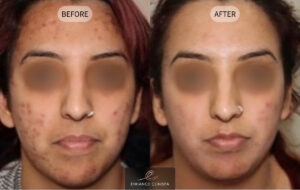
Several professional treatments can effectively improve both acne and pigmentation.
Medical-Grade Skincare for Acne and Pigmentation
Medical-grade skincare forms the foundation of any successful treatment plan.
Ingredients such as retinoids, vitamin A derivatives, and pigment-regulating compounds help improve skin turnover while reducing inflammation.
These products are significantly more effective than standard cosmetic skincare formulations.
Chemical Peels for Hormonal Acne and Pigmentation
Professional chemical peels for acne and pigmentation work by exfoliating damaged skin layers while stimulating healthy regeneration.
Salicylic acid peels are particularly effective for acne-prone skin as they penetrate oil glands and reduce congestion.
Peels can also gradually lighten pigmentation caused by acne.
Microneedling for Acne Scarring and Skin Repair
Microneedling skin rejuvenation stimulates collagen production by creating controlled micro-injuries within the skin.
This process encourages natural healing, improves skin texture, and helps fade pigmentation over time.
Microneedling is particularly helpful for improving acne scars and uneven skin tone.
Laser Treatments for Pigmentation and Acne Scarring
Advanced laser treatments for pigmentation can target deeper skin concerns including stubborn pigmentation and acne scarring.
Laser energy stimulates collagen regeneration while breaking down excess pigment within the skin.
These treatments can significantly improve skin clarity and overall complexion.
How Hormones Influence Skin Oil and Pigment Production
Hormones affect the skin in several complex ways.
Sebaceous Glands and Hormonal Activity
Sebaceous glands contain receptors that respond directly to hormonal signals.
When androgen activity increases, these glands produce more oil.
How Hormones Stimulate Melanin Production
Hormonal changes can also stimulate pigment cells within the skin.
This process explains why pigmentation disorders such as melasma often appear during hormonal shifts.
Why Hormonal Skin Conditions Fluctuate Monthly
Many patients notice acne worsening around specific times of the month.
This cyclical pattern reflects natural hormone fluctuations that temporarily increase oil production and inflammation.
A Long-Term Approach to Hormonal Skin Health
Hormonal acne rarely resolves with a single treatment.
The most successful strategies combine professional treatments, medical-grade skincare, and lifestyle considerations.
Combining Medical Skincare and In-Clinic Treatments
Combining professional acne treatments with targeted skincare often delivers the best long-term outcomes.
This integrated approach improves skin health gradually and sustainably.
Supporting Skin Barrier Function
Healthy skin requires a strong barrier.
Barrier repair helps reduce inflammation, prevent irritation, and support natural healing processes.
Lifestyle Factors That Affect Hormonal Skin
Factors such as stress, sleep quality, diet, and sun exposure can all influence skin health.
Addressing these areas alongside treatment can significantly improve long-term results.
When to Seek Professional Treatment
Persistent acne and pigmentation should not simply be accepted as part of ageing.
Professional guidance can dramatically improve outcomes.
Signs Your Acne Is Hormonal
Common indicators include:
- Breakouts along the jawline or chin
- Cyclical flare-ups linked to hormonal changes
- Deep, inflammatory lesions
When Pigmentation Needs Medical Treatment
If dark marks remain visible for months after acne heals, targeted treatment may be required to restore an even skin tone.
Why Early Treatment Prevents Long-Term Skin Damage
Early treatment reduces the risk of long-term pigmentation and scarring.
With the right strategy, it is entirely possible to restore clearer, healthier skin.
At Enhance Clinispa, every patient journey begins with a personalised consultation where we assess skin health and recommend the most appropriate treatments to achieve long-term results.
Book your personalised skin consultation.
FAQs
What causes hormonal acne in your 30s?
Hormonal acne in your 30s is usually linked to androgen activity, stress hormones, and hormonal fluctuations associated with menstrual cycles or perimenopause.
Why does hormonal acne leave dark marks?
Inflammation from acne stimulates melanin production, leading to post-inflammatory hyperpigmentation which appears as dark marks after spots heal.
What is the best treatment for hormonal acne and pigmentation?
The most effective approach combines medical-grade skincare, professional treatments such as chemical peels or microneedling, and targeted pigmentation treatments.
Can hormonal acne go away naturally?
Hormonal acne may fluctuate but often requires professional treatment to fully control breakouts and prevent pigmentation.
How long does pigmentation from acne last?
Without treatment, pigmentation can last several months. Professional treatments can significantly accelerate fading.